
It was now February, 1877. Here we were at Bristol, a large and apparently prosperous city, with fine buildings and good, paved streets, extending out from the river over fairly level ground.
This dock in which we were moored was situated nearly in the center of the town, and traffic in the streets in this vicinity was heavy all day. The people were friendly and agreeable.
There was an old man, by name James, who came on board to distribute and sell tracts and books. He was an exceptionally fine man. He invited us to come with him some evening when we had time off, then he would show us around in the city. He came on board nearly every day and we became well acquainted with him, and went with him several times to see the town. We soon understood he was trying to keep us away from the pubs, (public houses or saloons). One evening he took us along to the Good Templars' Hall. There was a large gathering of both men and women, and we were received with such exceptional good will that I was rather astonished. I could not speak or understand English as well as I would have liked, but it seemed to make very little difference to these folks. They talked to us and entertained us well, regardless of our short-comings in the use of their language. We understood it was a sort of temperance society. We were at their meetings quite often. They had good programs, and their hospitality was of the very best. They seemed to think it was a privilege to entertain Norwegian sailor lads, and they told us so.
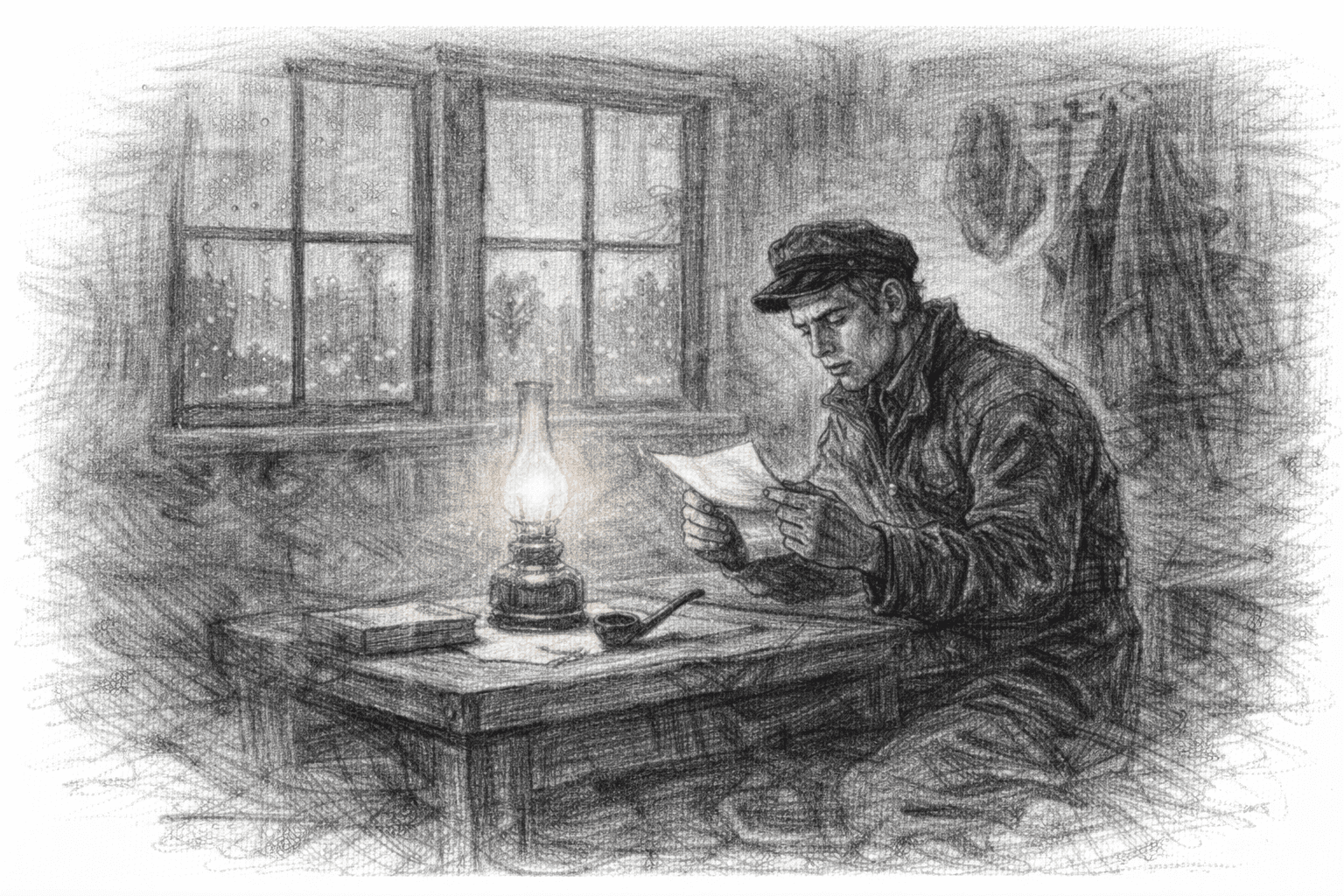
But, personally, the best of all the pleasant incidents was that I received a letter from Olava, in answer to that which I had sent her from Wilmington, N.C. It is unusually interesting to hear from the folks at home when one reaches port after a stormy and hazardous voyage. All that has been suffered is soon forgotten when on reads that they have followed us in their thoughts, and are longing to hear if we have reached our destination in good shape. It is almost like meeting with them for a few minutes, and seeing them near by. Then, one has to write again, and express the heart's feelings. And so, probably in the course of some months one may expect to receive an answer again, in some distant port, after one has had a lot of new experiences.
There was a deal of letter writing to do. I must write to father and brothers and sisters; and one letter to Olava at departure as well as at arrival in port, because we seldom knew where we were going next until our cargo had been unloaded. Not even the captain knew, because the owners, in the home port, often made the contracts for freight.
It took about three weeks to discharge our cargo in Bristol. Nothing of great moment happened. It was a comfortable, homelike port, and time passed rapidly enough. One day we heard we were to leave for Cardiff, take in a load of coal, and go to Cape Verde Islands.
Now we were to go south, out of the winter and its storms, and that, we felt sure, would be most agreeable.
We had 30 tons permanent ballast in the ship, to keep her steady, as she was rather top-heavy, but to make sure of safety, we took in 30 tons more. Then we said goodbye to Bristol, and a tug was to pull us over to Cardiff. We went out on ebbing tide and when we came over to Cardiff it was low water. So we had to drop anchor quite a distance out, and wait there till morning.
The captain went ashore, and we made ready to turn in for the night, when a strong wind came up. The ship lay side to the wind and began to list very much. Fearing trouble, we proceeded to take down the main and fore topgallant and royal rigging and put them in the hold. But it did not appear to help much. So we went to the hold and began to shift the ballast, which was mostly sand, over to one side to make sure she would not capsize. We were about through with that at midnight. Then the current changed with the tide, and the ship began to list to the other side. And now we had to work with all our might, scooping the sand back again, as it appeared we were in great danger. A little before dawn the wind abated, so we go 2 or 3 hours' sleep. It was a hard night for us, at anchor there outside of Cardiff, and we felt it in our arms for a long time after.
The tug came out in the morning and took us in to the dock. We took the rigging up out of the hold again, put it up, discharged the ballast; and it did not take long to run the ship full of coal. Then, with the tug at our bow, we were taken out beyond the pilot station.